
Contents
Overview
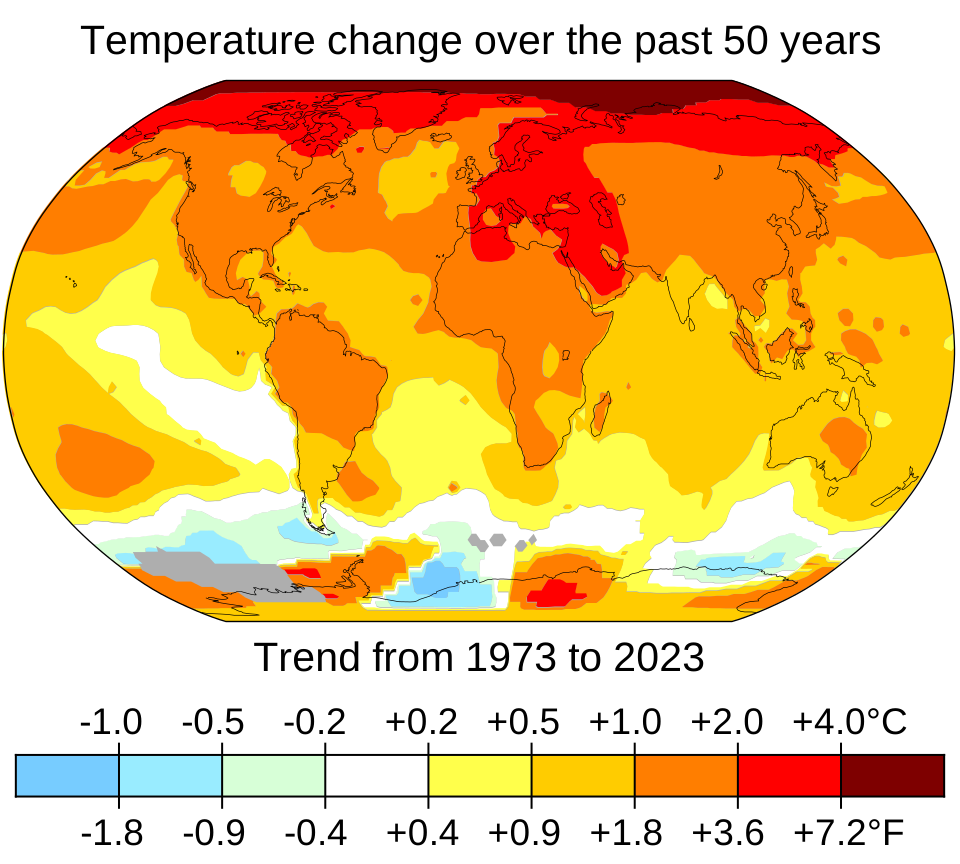
Climate change refers to the long-term warming of the planet, driven by human activities such as fossil fuel burning, deforestation, and industrial practices, which release greenhouse gases like carbon dioxide, leading to devastating effects on the environment, including expanding deserts, more frequent heat waves, and intense wildfires, as warned by scientists like James Hansen and Greta Thunberg, who have been instrumental in raising awareness about the urgent need for climate action, with organizations like the United Nations and the Intergovernmental Panel on Climate Change working to address this global problem, which is closely related to other environmental issues like air pollution and deforestation, and is being tackled through initiatives like renewable energy and sustainable development
📖 Definition & Core Concept
Climate change is a complex and multifaceted issue, involving the warming of the planet due to human activities, as reported by the National Oceanic and Atmospheric Administration
🔬 How It Works (Mechanics)
The mechanics of climate change involve the release of greenhouse gases, such as carbon dioxide and methane, which trap heat in the atmosphere, leading to a rise in global temperatures, with the Environmental Protection Agency providing detailed information on the causes and effects of climate change
📊 Key Facts, Numbers & Statistics
Real-world examples of climate change include the expanding deserts in Africa and Asia, the increasing frequency and severity of heat waves in cities like Los Angeles and New York City, and the intense wildfires in regions like Australia and California, with the World Wildlife Fund working to address the impacts of climate change on ecosystems and biodiversity
🌍 Real-World Examples & Use Cases
The effects of climate change include rising global temperatures, more frequent and severe heat waves, droughts, and storms
📈 History & Evolution
The future outlook for climate change is uncertain, but it is clear that immediate action is needed to reduce greenhouse gas emissions and transition to renewable energy sources, with companies like Tesla and Vestas leading the way in the development of sustainable technologies
⚡ Current State & Latest Developments
Common misconceptions about climate change include the idea that it is a natural phenomenon, when in fact human activities are the primary cause of the current warming trend, with the Skeptical Science website providing detailed information on the science behind climate change and addressing common misconceptions
🔮 Why It Matters & Future Outlook
Individuals can contribute to addressing climate change by reducing their carbon footprint, using public transport, carpooling, or driving electric or hybrid vehicles, and by supporting organizations that work on climate change mitigation and adaptation efforts, such as the World Wildlife Fund and the Sierra Club
Key Facts
- Year
- 2023
- Origin
- Global
- Category
- task-reminders
- Type
- concept
- Format
- what-is
Frequently Asked Questions
What is climate change?
Climate change refers to the long-term warming of the planet, driven by human activities such as fossil fuel burning, deforestation, and industrial practices, which release greenhouse gases like carbon dioxide
What are the effects of climate change?
The effects of climate change include rising global temperatures, more frequent and severe heat waves, droughts, and storms
What can be done to address climate change?
To address climate change, individuals, organizations, and governments can reduce greenhouse gas emissions by transitioning to renewable energy sources, increasing energy efficiency, and protecting natural habitats like forests and wetlands
How can individuals contribute to addressing climate change?
Individuals can contribute to addressing climate change by reducing their carbon footprint, using public transport, carpooling, or driving electric or hybrid vehicles, and by supporting organizations that work on climate change mitigation and adaptation efforts